"Ughh, why this captcha so annoying?!"
If you’ve ever groaned at a box full of blurry traffic lights or squiggly text that looks more like abstract art than letters, congratulations, you’ve met CAPTCHA! It’s that little test on websites that asks, “Are you really human?” For years, CAPTCHA has been the internet’s gatekeeper, standing between us and spammers, hackers, and bots.
But here’s the thing: it’s 2025 now, and artificial intelligence is no longer science fiction. Bots are smarter, faster, and in some cases, better at solving these puzzles than humans. So, it’s fair to ask: does CAPTCHA still work, or is it time for something new?
A Quick Trip Down Memory Lane
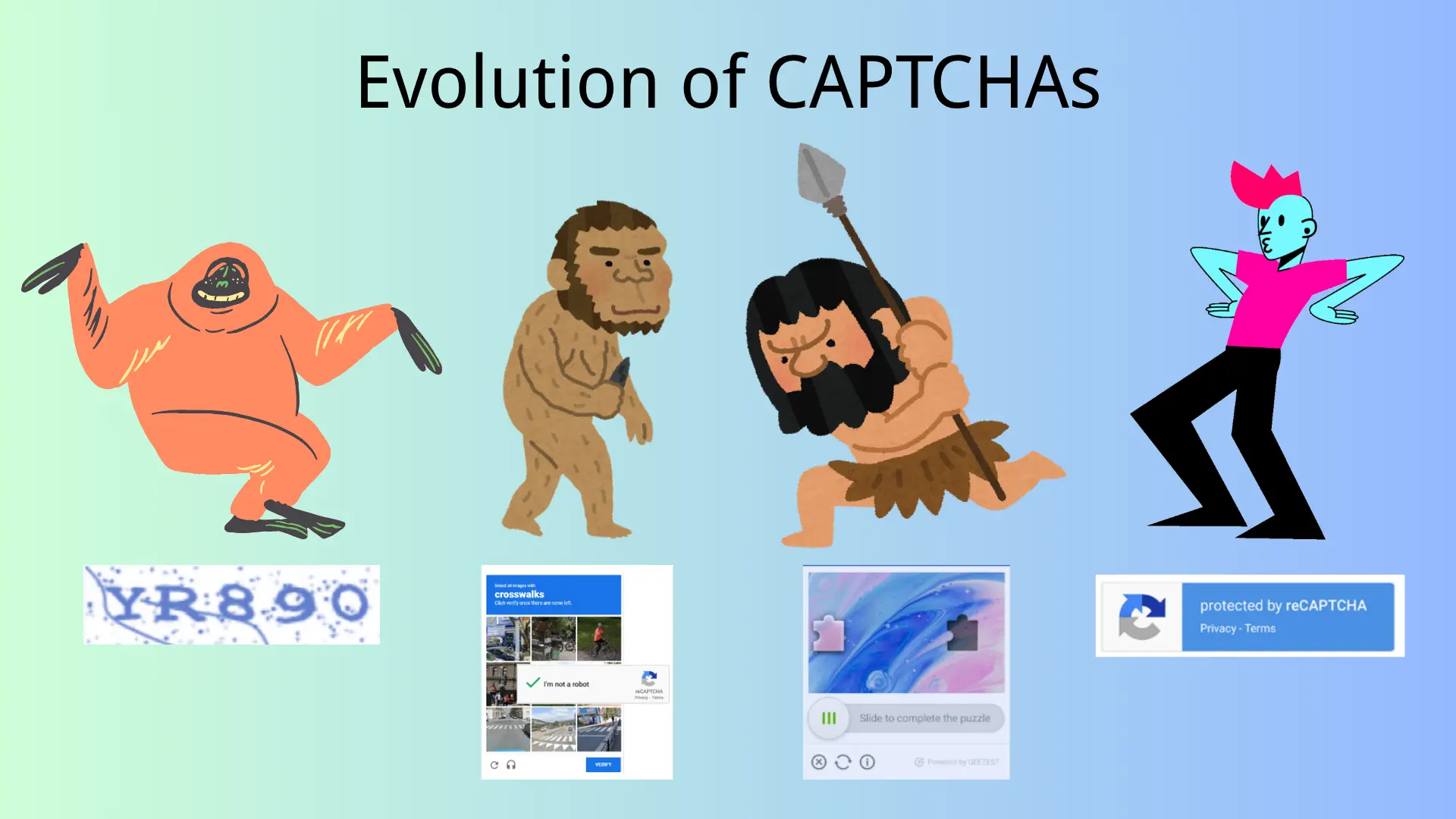
CAPTCHA started out in the early 2000s as a quirky solution to a growing problem: websites were getting swamped with spam. Back then, the test was simple—you’d be asked to type in wobbly, distorted letters that a bot couldn’t read. It was annoying, sure, but it worked.
Over the years, CAPTCHA evolved into something more visual. Suddenly, we were asked to click on all the images with stoplights or crosswalks. Then came reCAPTCHA, Google’s spin on the idea. It was smarter, often invisible, and it analyzed how you interacted with a page rather than just what you clicked. At its best, it stopped the bad guys without slowing down the good guys.
Why CAPTCHA Still Exists
For all the eye-rolls and sighs it causes, CAPTCHA has a very real job. It helps to:
- Stop spam submissions and fake accounts.
- Protect businesses from bots trying to steal or overload data.
- Keep online communities safer by filtering out automated abuse.
Think of CAPTCHA like a bouncer at the door of a club. Sometimes he checks your ID such as puzzle captcha. Other times he just takes one look at you and knows you’re fine, such as invisible captchas.
The Problem in 2025
Here’s the plot twist: bots have gotten really good at pretending to be us. Thanks to machine learning and computer vision, AI can now breeze through many CAPTCHAs that stump actual humans.
There are also “captcha farms,” where low-paid workers around the world solve these puzzles for bots in real time. That means the security check isn’t always doing what it’s supposed to do.
And for everyday users? CAPTCHAs can be downright frustrating. Imagine being in a rush, trying to buy concert tickets, only to spend two minutes clicking on grainy pictures of bicycles. For people with disabilities, these puzzles can be even more of a barrier, making the internet less inclusive.
What the Future Holds
So, if bots are catching up, what’s next? The answer lies in AI fighting AI. Security systems are already shifting toward smarter, less intrusive methods:
- Behavioral signals: Instead of asking you to solve a puzzle, websites watch how you move your mouse, how fast you type, or even how your device interacts with the page. Subtle differences reveal if you’re human.
- Risk scoring: Google’s reCAPTCHA v3 assigns a “trust score” to each visitor. If you look suspicious, you get more checks. If not, you move along without even noticing.
- Invisible protection: The trend is moving toward security that you don’t even feel. The best defense is one that doesn’t interrupt your day.
A World Without CAPTCHAs?
Imagine logging into your favorite site without ever being asked to “prove” yourself. No more endless grids of taxis. No more guessing if that blurry blob is an “m” or an “n.” Just smooth, seamless browsing. That’s where we’re headed.
It doesn’t mean CAPTCHA is going away completely—it just means it’s transforming. Instead of obvious puzzles, the checks will happen quietly in the background. AI will be the new bouncer, watching, learning, and keeping bots out while letting humans through without friction.
Final Thoughts
CAPTCHA has been with us for more than 20 years. It started as a clever little puzzle, became a cultural annoyance, and now stands at a crossroads. In 2025, it’s clear the future isn’t about humans solving tests—it’s about AI silently protecting us behind the scenes.
So the next time you find yourself clicking on a suspiciously endless row of traffic lights, remember: you’re part of a bigger story. CAPTCHA isn’t just a nuisance—it’s a glimpse into the tug-of-war between humans, bots, and the AI that keeps the digital world safe.