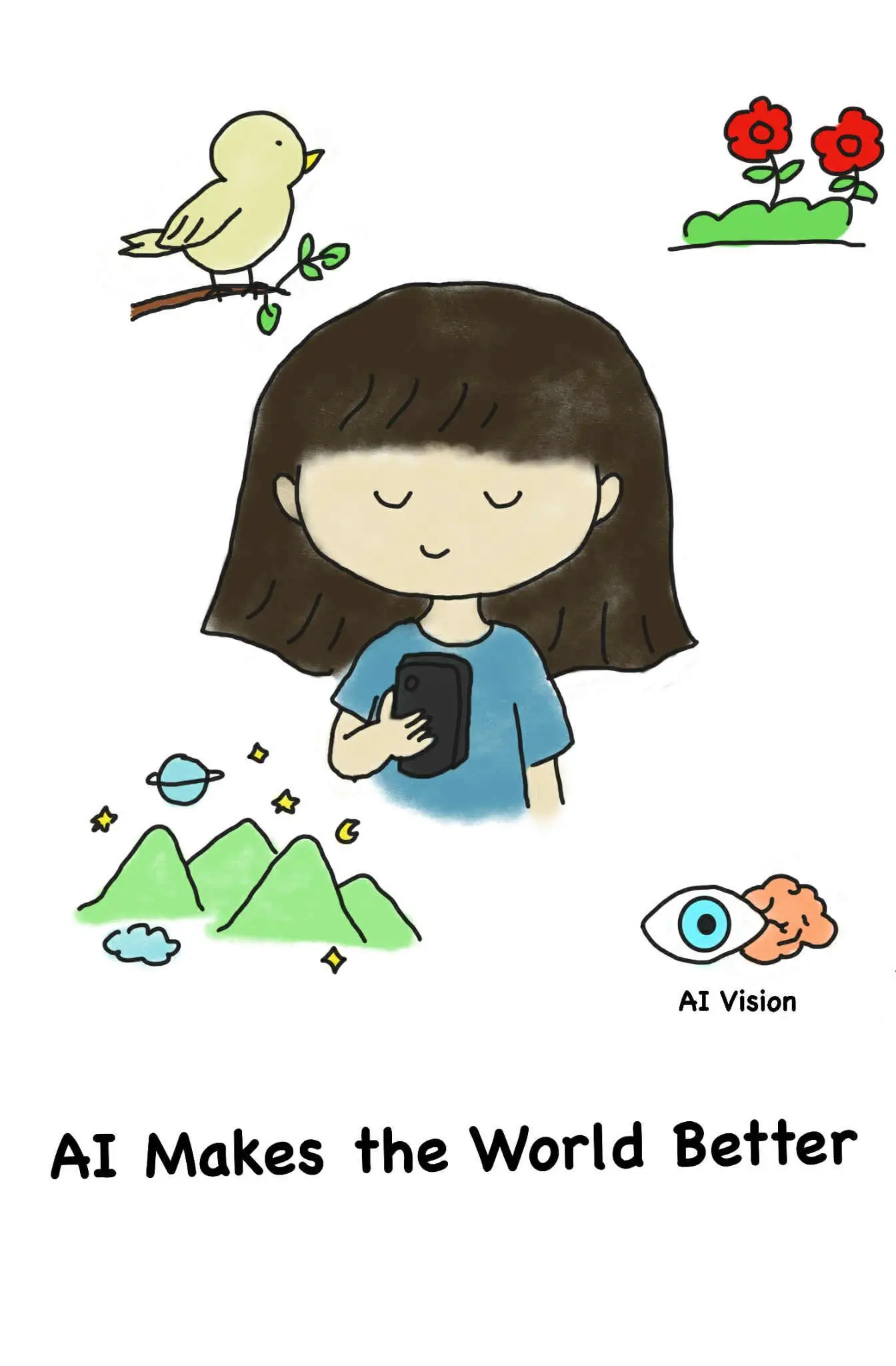
When most of us hear the words artificial intelligence, our minds jump to shiny robots, high-tech labs, or lines of code we’ll never understand. But the truth is, some of the most beautiful uses of AI aren’t futuristic at all—they’re happening quietly, right here in everyday life.
Imagine an app that can read a handwritten note from your loved one, tell you what’s on a restaurant menu, or describe the smile on a friend’s face. For people who are blind or have low vision, this isn’t just technology—it’s freedom, independence, and a touch of magic in their daily lives.
Two apps leading the way are Microsoft’s Seeing AI and Google’s Lookout, both created with one goal in mind: to open up the world for those who see it differently.
Seeing AI: Narrating the World Around You

Launched by Microsoft, Seeing AI acts like a personal narrator. Point your phone’s camera, and the app can read printed and handwritten text, recognize people and their facial expressions, identify products through barcodes, and even describe entire scenes. Imagine opening a book, holding your phone over the page, and having it read the words back instantly. That’s the kind of independence Seeing AI delivers.
Its strength lies in practicality. It’s built to help with everyday tasks, whether you’re reading a menu at a café or sorting through documents at work. Microsoft designed it with a focus on accessibility and empathy, showing how AI can be both powerful and human centered.
Google Lookout: Instant Awareness Through AI

On the other hand, Google Lookout focuses on fast, real-time recognition. With your phone’s camera, it can immediately read text, identify objects, scan barcodes, recognize currency, and even describe surroundings. For example, when you’re at the grocery store, Lookout can tell you exactly what item you’re holding and read the label on the spot.
Lookout’s edge comes from speed and responsiveness—it doesn’t make you wait. It’s powered by Google’s AI ecosystem, meaning it constantly learns and improves, making descriptions more accurate with time.
Seeing AI vs Lookout: What’s the Difference?
While both apps share a mission, they shine in slightly different ways:
- Seeing AI excels in narration and document reading, with features like facial recognition and scene descriptions.
- Lookout is all about quick, real-time assistance, great for shopping, navigation, and identifying everyday objects.
In practice, many users find that using both together gives them the best of both worlds.
Why This Matters
For people with vision loss, independence is everything. These apps reduce the need to ask for help, boost confidence, and open doors to experiences that were once harder to access. And for the rest of us, they’re a reminder that AI isn’t just about the latest gadgets—it’s about making life more inclusive.
The Future of Accessible AI
The future looks even brighter. Imagine apps that don’t just tell you what’s around you but describe actions—like letting you know your coffee machine just finished brewing or that your dog is wagging its tail nearby. With multimodal AI advancing quickly, that future isn’t far away.
Final Thoughts
Both Seeing AI and Google Lookout prove that AI doesn’t need to be flashy to be transformative. They’re changing lives in small but powerful ways—reading signs, identifying faces, or describing a room. Together, they show what’s possible when technology is built with empathy and inclusivity in mind.